Is Trex really maintenance-free? What's the catch?
Alright, let's just get this out of the way first. It's probably the biggest misconception out there, and frankly, it's a little annoying. No, Trex isn't 100% maintenance-free. Nothing you put outside in the Vegas sun is, especially not something you walk on every day. But here's the honest truth: it's low maintenance, way lower than wood. You won't be sanding, staining, or sealing it every year or two like you would a traditional wood deck. That's a huge win, believe me, especially when you consider how quickly our dry heat and intense UV rays can just chew through a wood finish.
The "catch," if you really want to call it that, is you still need to clean it. Dirt, dust, pollen, and even the occasional spilled drink will pile up. If you've got a pool, you'll get some splashing, and maybe even some mineral deposits over time. A good scrub with soap and water, or a gentle pressure wash (on a low setting, mind you, and always test a small, hidden area first) once or twice a year will keep it looking great. Don't let anyone tell you it's a "set it and forget it" situation, because that's just not realistic for any outdoor surface, especially here in the desert.
How does Trex hold up to the extreme Las Vegas heat and sun?
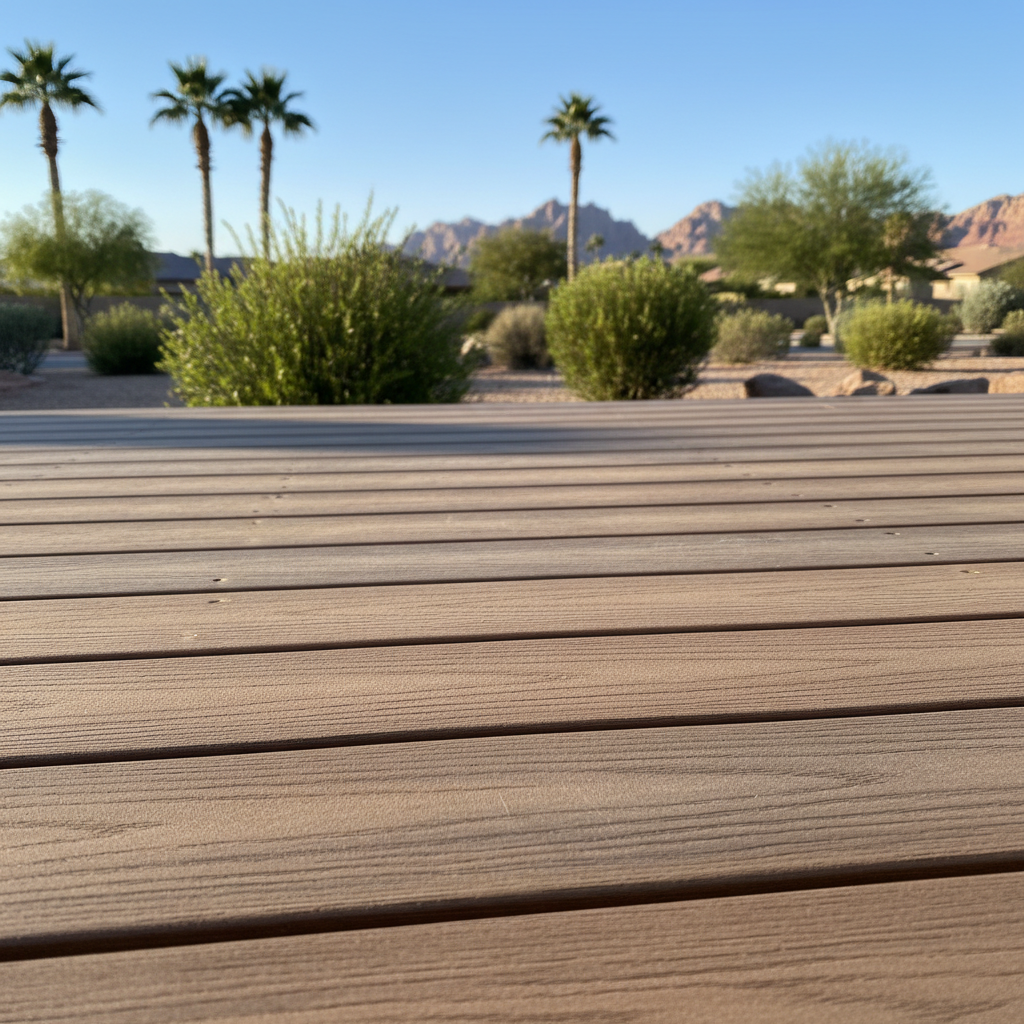
This is a critical question for us here in Vegas, right? Our summers are brutal, with temperatures regularly hitting 110 degrees Fahrenheit or more, and that sun just bakes everything. Trex, and other quality composite decking, is designed to handle it much better than wood. It won't splinter, rot, or get eaten by termites, all huge problems for wood decks in our climate.
Now, will it get hot? Absolutely. Any dark-colored surface will get hot in direct sunlight. If you choose a darker Trex color, expect it to be warm to the touch, maybe even too hot for bare feet on the hottest days. Lighter colors will reflect more heat and stay cooler. Trex has improved their technology over the years, especially with their capped composites, which offer better fade and stain resistance. You'll still see some thermal expansion and contraction with temperature swings – that's just physics, after all – but a good installer like us at Pacific Deck knows how to account for that in the design and gapping to prevent issues. We've seen Trex decks hold up beautifully for years, even through our craziest heat waves, as long as they're installed correctly.
Can I really install a Trex deck myself, or do I need a pro?
Look, I'm a contractor, so I'm always going to lean towards recommending a professional, and not just because it's my business. Trex markets itself as DIY-friendly, and for a small, simple ground-level deck, an experienced DIYer with good carpentry skills might be able to pull it off. But here's where people run into trouble: proper framing, ledger board attachment, understanding joist spacing, dealing with thermal expansion, and getting those hidden fasteners just right. A lot of folks underestimate the complexity, especially when you're talking about an elevated deck, stairs, or integrating it with existing structures like a pool or patio cover.
In Las Vegas, we also have specific building codes and permitting requirements. A professional deck builder knows these inside and out, ensuring your deck is safe, up to code, and passes inspection. Plus, if you mess up a DIY job, it can end up costing you more to fix than if you'd hired a pro in the first place. You're also protecting your investment – a professionally installed deck will last longer and perform better, and you'll have a warranty on the labor as well as the materials. So, while you can try, I'd seriously consider whether you've got the time, tools, and expertise to do it right the first time.
What's the deal with fading and staining? Does Trex really resist them?
This is another area where Trex has made huge strides, especially with their capped composite lines (like Trex Transcend, Trex Enhance, and Trex Select). The older, uncapped composites could show some fading and were more susceptible to stains. But modern Trex boards have a durable, protective shell that wraps around three or four sides of the board. This cap is what gives it its excellent resistance.
For fading, the cap layer contains UV inhibitors that significantly reduce color degradation over time. You'll still see a very slight, natural weathering in the first few months, but after that, the color stabilizes. It's not like wood that constantly changes color. For staining, that cap acts as a barrier. Things like spilled wine, grease, or even pet waste are much easier to clean off compared to an uncapped board or wood. The key is to clean spills relatively quickly. Don't let a grease stain from the BBQ sit for weeks in the sun, or it might become more challenging to remove. But generally, yes, modern Trex is very good at resisting both fading and staining.
How much does a Trex deck cost compared to wood in Las Vegas?
This is where the rubber meets the road for most homeowners. Upfront, a Trex deck is almost always going to cost more than a pressure-treated wood deck. You're paying for engineered materials, advanced manufacturing, and the benefits of low maintenance. Depending on the Trex line you choose (Select is generally the most budget-friendly, Transcend is premium), the material cost alone can be 2-3 times that of basic wood decking.
However, you've got to look at the long-term value, especially in a place like Vegas. With wood, you're looking at regular maintenance costs: cleaning, sanding, staining, and sealing. That's time, money, and effort every year or two. Over the lifespan of the deck, those maintenance costs for wood can easily add up to, or even surpass, the initial higher cost of Trex. Plus, wood decks are more prone to rot, splinters, and termite damage here, which can lead to expensive repairs or even early replacement. So, while the sticker price for Trex is higher, its total cost of ownership over 15-25 years is often lower, and you get to enjoy your deck instead of constantly working on it.
What kind of warranty does Trex offer, and what does it cover in our climate?
Trex offers a pretty solid warranty, which is one of the reasons it's such a popular choice. For most of their capped composite decking lines, you're looking at a 25-year limited residential warranty against material defects, fading, and staining. Some of their premium lines, like Trex Transcend, even offer a 50-year limited residential warranty.
This warranty covers things like the boards rotting, splintering, delaminating, or experiencing excessive fading or staining under normal use. It's a testament to how confident they are in their product's durability, even in harsh conditions like our Las Vegas climate. Now, it's important to read the fine print, as with any warranty. It doesn't cover damage from improper installation (another good reason to hire a pro!), misuse, or acts of nature. But knowing you have that kind of backing for a quarter-century or more gives a lot of homeowners real confidence. It shows they stand behind their product, which is something you definitely want when you're making a significant investment in your home.
Are there any specific Trex products or colors you recommend for Las Vegas homes?
When it comes to Trex in Vegas, I usually steer folks towards their capped composite lines. That protective shell is just too important for our sun exposure. Trex Transcend and Trex Enhance are both great options. Transcend is their top-tier product, offering the best fade and stain resistance and a really rich, natural wood grain. Enhance is a bit more budget-friendly but still gives you excellent performance.
As for colors, it really depends on your style and how much heat you want to deal with. Lighter colors, like Trex's "Clam Shell" or "Foggy Wharf" (from the Enhance Naturals line), will stay cooler underfoot. They also tend to blend well with the desert landscape and many of the stucco homes you see in neighborhoods like Summerlin or Henderson. If you absolutely love a darker look, like "Island Mist" or "Lava Rock," just be prepared for it to get hot. You might want to consider adding shade structures or outdoor rugs if you plan on walking barefoot a lot. Ultimately, I always recommend getting samples and seeing them in your own yard, at different times of day, to get a real feel for how they'll look and how much sun they absorb.
What's the best way to clean a Trex deck here in Vegas?
Keeping your Trex deck clean in Vegas is pretty straightforward, but you want to do it right to protect your investment. For general dirt, dust, and pollen – which we get a lot of – a simple sweep with a broom is often enough. For a deeper clean, especially after a dust storm or if you've had a party, a bucket of warm, soapy water (dish soap works fine) and a soft-bristle brush is your best friend. Scrub in the direction of the grain, then rinse thoroughly with a garden hose. Make sure you get all the soap residue off, too.
For tougher stains like grease, oil, or even some of the hard water spots we sometimes get from pool splash, Trex recommends specific composite deck cleaners. You can find these at most home improvement stores. Always follow the product instructions, and test it on an inconspicuous area first. You can also use a pressure washer, but be very careful. Use a wide fan tip (like a 40-degree nozzle) and keep the pressure below 1500 PSI. Hold the nozzle at least 8-12 inches from the deck surface and spray in the direction of the grain. Too much pressure or too close, and you can damage the cap layer, which you definitely don't want to do. Regular, gentle cleaning is key to keeping your Trex deck looking sharp for years in our tough environment.