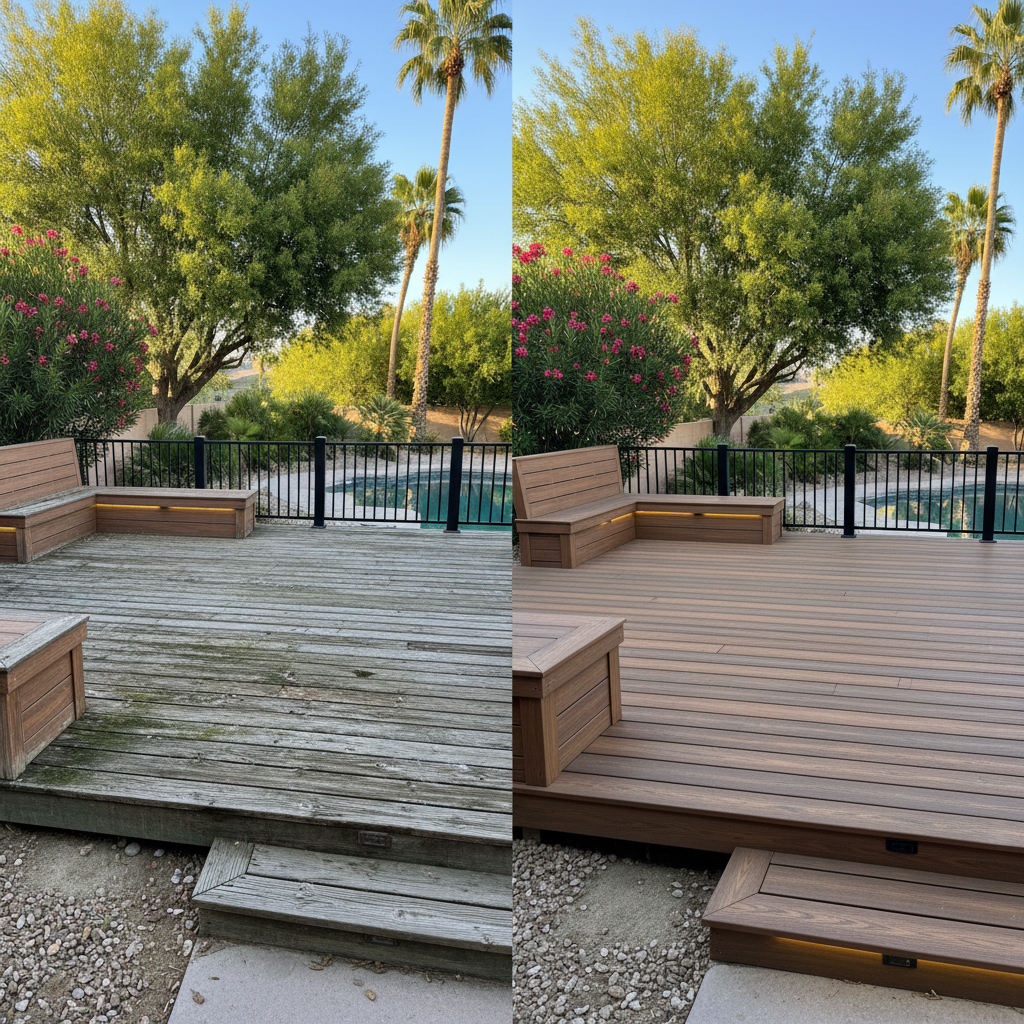
Thinking about a composite deck? That's a smart move, especially for our Las Vegas climate. No splinters, no endless staining, and it just looks good. But once you start poking around, you'll quickly figure out there's more than one kind of composite out there. Specifically, you'll hear about "capped" and "uncapped" composite decking. So, what's the real difference? And which one makes sense for your backyard?
What's Uncapped Composite Decking?
Let's start with uncapped. This is the original composite decking, the OG, if you will. It's a mix of wood fibers (think sawdust or wood flour) and recycled plastics, all blended together and then squeezed into deck boards. Imagine it like a giant, super dense cookie dough. The wood and plastic are mixed throughout the whole board.
When this stuff first came out, it really changed the game compared to traditional wood. Less upkeep, no rot, no termites. People loved it! But, as time went on, some issues started popping up, especially in places with extreme weather like ours.
The Pros and Cons of Uncapped Composite
Here's what I've seen with uncapped composite:
- Cost: Generally, it's cheaper upfront than capped composite. If budget is your absolute top priority, this might look pretty good.
- Appearance: It looks decent at first, often with a more natural, matte finish. But, honestly, that's usually where the good news ends for Vegas.
- Durability & Maintenance (Here's the Catch): This is where uncapped really falls short, especially out here in the desert. Because the wood fibers are exposed on the surface, uncapped boards can soak up moisture. Not like wood, no, but enough to cause problems. They can get mold and mildew, particularly in shaded spots or if you're hosing down your deck often. They're also way more likely to stain from things like spilled BBQ sauce, red wine, or even just leaves breaking down. And the sun, which we have plenty of, can make them fade a lot over time. Plus, they tend to scratch more easily. You'll probably find yourself cleaning them more often, and scrubbing harder, just to keep them looking halfway decent.
Enter Capped Composite Decking
Okay, now let's talk about capped composite. This is the next generation of composite decking, and frankly, it's what I recommend for most homeowners in Las Vegas. Picture that same wood-plastic core, but then it's wrapped or "capped" on three or four sides with a tough, protective polymer shell. Think of it like a candy bar with a hard candy coating, if you get my drift.
This cap is usually made from a high-performance plastic, like PVC, and it's actually fused right onto the core during manufacturing. It's not just a paint job; it's a permanent, protective layer.
The Benefits and Drawbacks of Capped Composite
Here's the rundown for capped composite:
- Cost: It's usually more expensive upfront than uncapped. You're paying for that extra layer of protection and the technology that goes into it.
- Appearance: This is where capped really shines, no pun intended. Manufacturers can create incredibly realistic wood grain patterns and a huge variety of colors. That cap also helps keep the color vibrant, fighting off fading from our intense UV rays.
- Durability & Maintenance (The Winner): This is the big one, especially for us. The polymer cap makes these boards super resistant to moisture absorption. That means no mold, no mildew, and way less staining. Spilled something? Just wipe it up. Leaves? Blow 'em off. The cap also gives you superior scratch resistance, which is great if you've got pets or outdoor furniture moving around. They're incredibly easy to clean – usually just some soap and water. And they hold their color much, much better under the relentless Las Vegas sun. You won't see that chalky, faded look you sometimes get with uncapped boards after just a few years.
- Heat Retention: One thing to keep in mind, especially with darker colors, is that some capped composites can get pretty hot under direct sun. This is true for many outdoor surfaces in Vegas, let's be honest, but it's worth considering if you plan to walk barefoot a lot. Lighter colors or specific brands like Pacific Deck, which use heat-mitigating tech, can definitely help with this.
My Recommendation for Las Vegas Homeowners
Look, I've been building decks in this town for a long time. I've seen firsthand what the sun, the dust, and the occasional monsoon can do to outdoor materials. For a long-lasting, low-maintenance deck that will look great for years without you having to constantly scrub it, capped composite decking is absolutely the way to go here in Las Vegas.
That slightly higher upfront cost? It's almost always made up for by the significantly reduced maintenance and the extended good looks of the deck. You'll spend less time cleaning and more time actually enjoying your outdoor space. Think about it: our summers hit 115 degrees, and the UV index is just brutal. That protective cap isn't just a fancy feature; it's a necessity for materials meant to last outdoors here.
If you're still on the fence, come talk to us at Pacific Deck. We can show you samples of both and walk you through all the options. You'll see the difference firsthand, and we can help you pick the perfect capped composite that fits your style and budget, making sure your deck stands up to everything the Vegas desert throws at it.